This is the first part in a series exploring the creator economy, why mobile is reshaping it, and how creators can build something that truly belongs to them.
If we zoom out 20 years, we see a radical story of change in entertainment, attention and influence.
A mere two decades ago, entertainment was still largely centralised and a relatively small number of gatekeepers (TV networks, film studios, record labels and publishers) decided what was made, who got seen and what became culture. Today, that power has shifted, and it's sitting in the pockets of anyone with a smartphone and an internet connection.
From the first iPhone to a $250 billion creator economy
The iPhone arrived in 2007 and heralded a quiet and significant change. Simultaneously, YouTube was maturing, Netflix was transitioning from DVDs to streaming, Facebook was scaling globally, and the internet was becoming fast enough to support video and streaming.
Following the steady and rapid rise in social media platforms and those who captured attention in their chosen niche, in December 2024, Oxford English Dictionary officially added the term ‘content creator’. We were well and truly in a new era, that of the creator economy.
Now the creator economy is worth a massive $250 billion and growing. In fact, Goldman Sachs predicts it could reach $480 billion by 2027. There are also more than 200 million creators globally as of last year, and 61% of consumers say they trust recommendations from creators more than brand advertising.
To keep up with these shifting tides, the term ‘content creator’ has bloomed to encapsulate a number of different approaches to posting online. So what’s the common thread? What do we actually mean when we use this term?
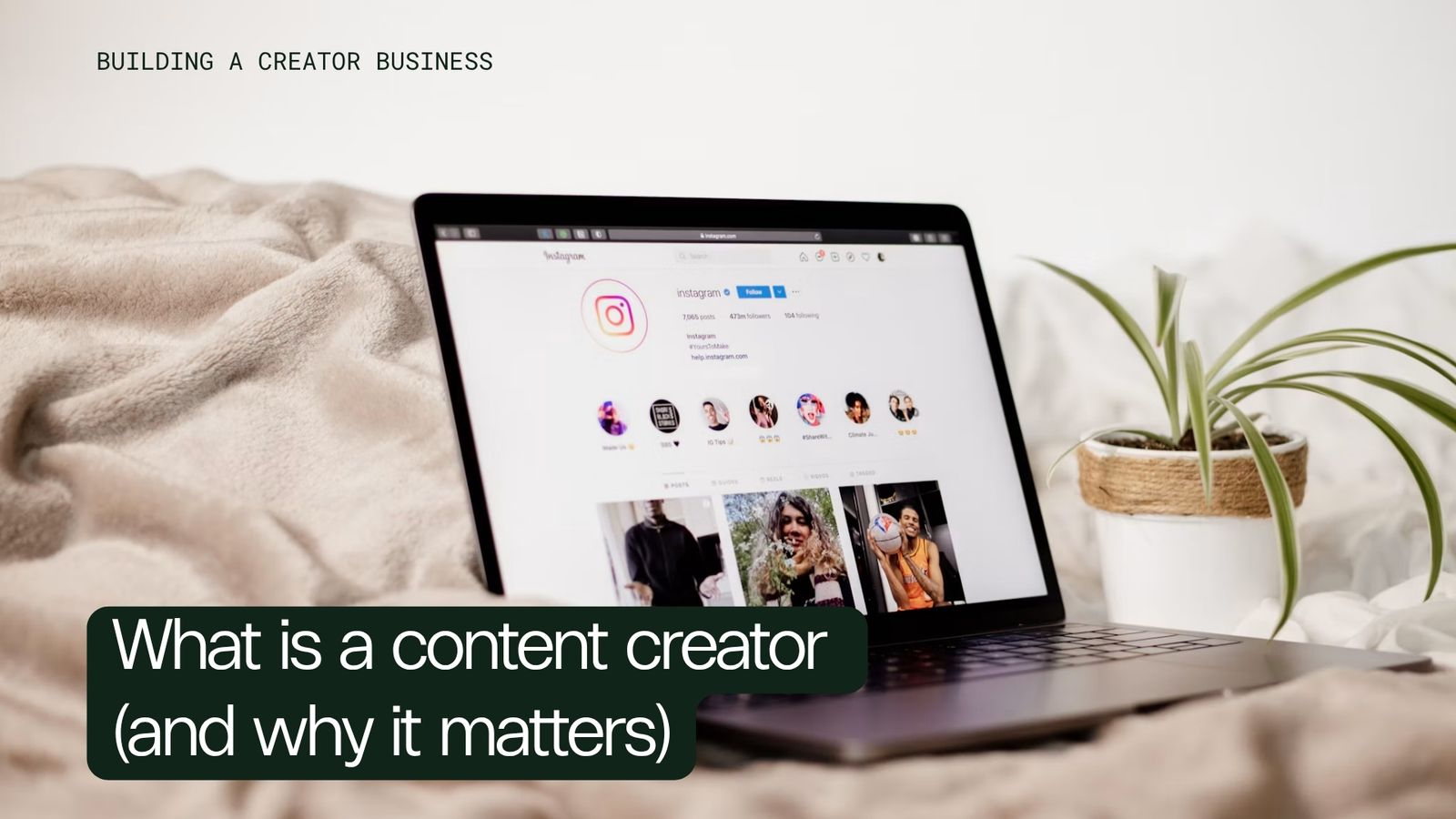
A content creator is anyone who builds an audience around their expertise, perspective or passion
That's it. The term doesn’t dictate a specific number of followers, it doesn’t describe a minimum required revenue, nor does it imply a creator has to be loyal to one platform.
The term can be used for a chef sharing recipes on YouTube, for a financial advisor who posts explainers on LinkedIn, a personal trainer who shares workouts and inspiration on Instagram, a teacher who makes educational videos in their spare time, or a nutritionist who started a newsletter because they wanted to share what they knew.
What's changed in the last few years isn't who qualifies, it's what's possible for them. The infrastructure for turning an audience into a real, sustainable business has become genuinely accessible in a way it never was before.
The gap between ‘creator’ and ‘business owner’ is closing
For many, especially in the early days of social media, content creation didn't start as a career path, it started as a hobby. The earliest YouTubers, bloggers and podcasters were making content because they enjoyed it, driven by passion, curiosity or simply the novelty of having a global publishing platform. Monetisation was an afterthought, if it was a thought at all.
But as audiences grew, so did the realisation that attention had real value. Platforms introduced revenue sharing. Brands started paying for access to engaged audiences. Slowly, what had begun as a creative outlet started to look a lot like a business.
As quickly as the opportunities arose, they diminished. These huge, powerful platforms flipped the script, changing algorithms, slashing organic reach, and making it clear that building on rented land comes with real risk. The creators who are thriving are those who have stopped relying on algorithm-driven platforms and are building something they own.
The tools, platforms and models that once required a big budget or a tech co-founder are now much more within reach. Subscription models, owned platforms, direct-to-audience revenue - what used to require a media company can now be built by one person or a small team with the right support. The question for creators is now how to intentionally create a business opportunity that lasts the distance.
Why the definition matters
If you've been dismissing the ‘content creator’ label as something that applies to other people, you may be underselling what you've already built. If you have an audience that trusts you, even a small one, you have something genuinely valuable.
From working with creators across a wide range of niches, we’ve seen the ones who thrive aren't always the ones with the biggest followings. They're the ones who took ownership of their audience, found the right way to deliver value, and built a platform that reflected their brand rather than borrowing space on someone else's.
That's exactly what we’re here to support - helping creators make the leap from audience to business. There’s also a reason we’ve chosen apps as the way to do this. See the next blog in this series to discover more about the power of mobile.
Up next in Part 2: Why Voyage believes mobile is where that next step begins.