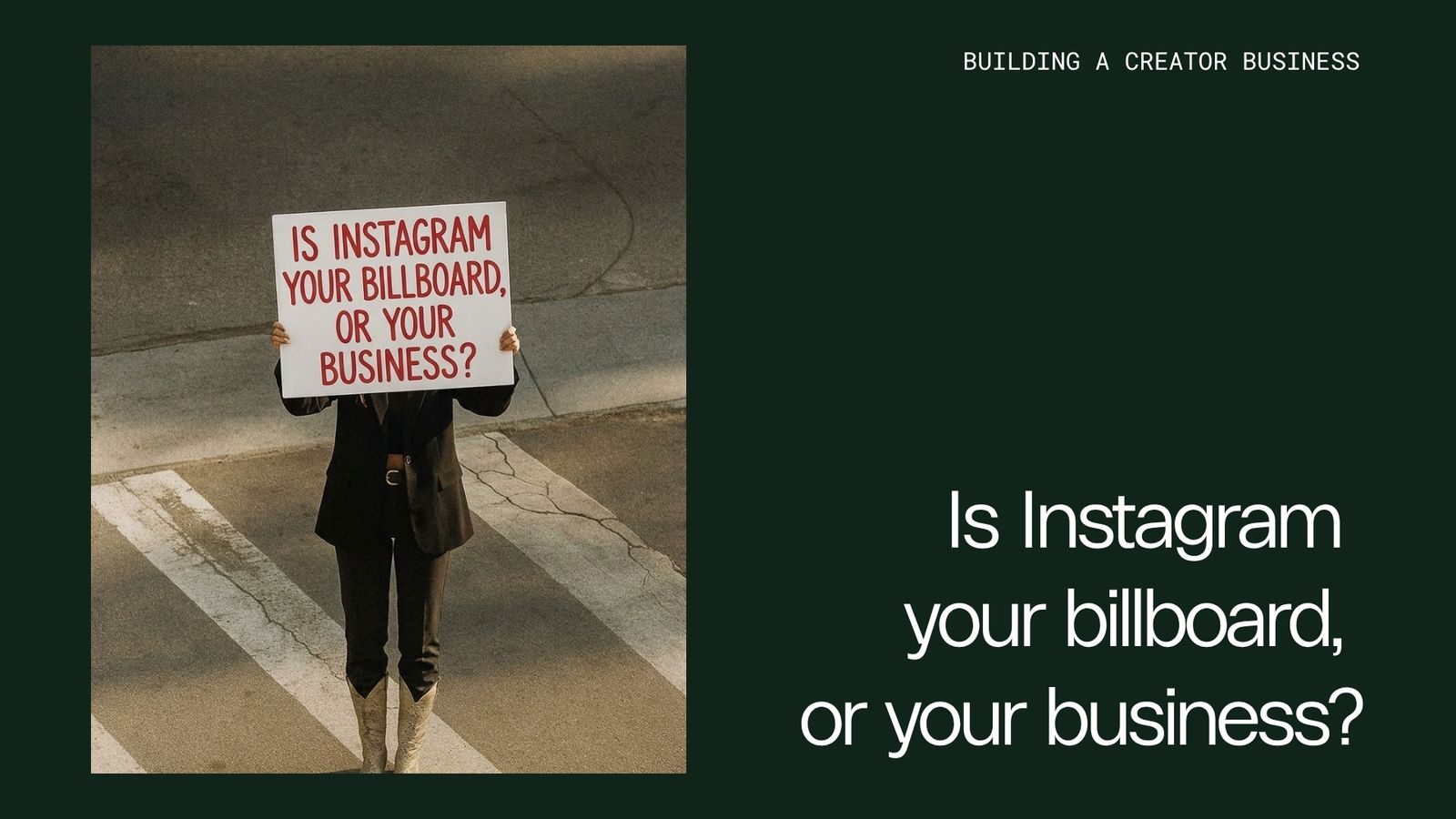
The most successful creators we see, the ones building durable businesses, treat social media as a funnel and not a destination.
Many creators are showing up consistently, growing their audience, putting out content that genuinely resonates, and yet income and engagement remains unpredictable. A good brand deal month is followed by a quiet one. Impressions are strong one week, but down by half the next. The effort stays constant, but the returns don't.
That gap between effort and stability isn't anything to do with the content, it’s to do with structure, and structure starts with understanding what you're building and where you're building it.
What a funnel actually means (without the marketing jargon)
A funnel is a term used to describe the journey that someone takes from never hearing your name to becoming a loyal user or customer.
Let’s consider a real world example. Someone discovers you on Instagram, they like what they see and follow you. They keep seeing your content, and start to engage more. They join your newsletter, download your free guide, and connect with the community. Then, they become a loyal subscriber of your app and go on to recommend it to others.
Many creators are still optimising obsessively for the top of that journey. They’re creating great content, posting consistently, making use of catchy trends and formats, and building a reputable name for themselves.
But, too often, they haven’t built out the next step. The audience arrives, enjoys the content, and leaves. The chance to develop deeper relationships are only relegated to the comments section. Revenue remains dependent on fluctuating reach, brand deals and affiliate links.
The reality is that a creator with 20,000 followers and a thriving membership of 1,000 paying members is often running a more successful business than a creator with 100,000 followers and no off-platform revenue. Follower counts are a vanity metric. What matters is what you've built with the attention you've earned.
Social media platforms aren’t neutral
It's worth being clear-eyed about what social platforms are actually designed to do. They’re designed to keep people on the platform, not to send your audience somewhere more valuable to you.
Every feature update, every algorithm tweak, every new content format is in service of that goal, and it makes sense - the more time people spend on the platform, the more impressions ads get, and the more revenue the platform makes.
Far from being cynical, this take is an important reality to accept. The platforms are brilliant at what they do, but they will always optimise for their business, not yours.
Once you understand that, you stop being frustrated by declining reach or inconsistent distribution and start designing around it. You can use the platform for what it's genuinely good at (discovery, entertainment, building trust at scale) and build out other steps of your funnel, including infrastructure you have full control over.
Designing your funnel intentionally
Most creators have some kind of funnel. Perhaps a link in bio that goes to a website, maybe an email opt-in that collects a few addresses. That's a start, but it's not a strategy.
An intentional funnel is where you know exactly what you want people to do when they discover you, and make that next step obvious, compelling and valuable. It means your content is designed not just to entertain or inform, but to move people toward something.
A food creator might use Instagram Reels to share quick recipes, then direct people who want more to a paid recipe membership with meal plans and shopping lists. A fitness creator might use short-form workout videos to introduce a membership with structured programmes and a workout library. A business educator might share insights on LinkedIn and Instagram that lead to a newsletter with a paid membership option.
In each case, social media helps people discover you and gives them useful free content. The deeper experience happens through a branded membership website built with Voyage or another product suited to your audience. That destination gives people a clear next step and a reason to become members.
What the other end of the funnel looks like
When it comes to this last part of the funnel, think about what kind of deeper relationship makes sense for your audience. Some audiences want community, some want access, some want structured value. The format that works is the one that matches what your specific audience actually wants more of.
If you're uncertain which one fits your audience, the answer is often already hidden in plain sight in your DMs, your comment section, or the questions people ask you most. The audience that keeps asking "how do I actually do this?" wants structure. The one that says "I wish there were more people like this in my life" wants community. The one that asks "can I get your opinion on this?" wants access. Pay attention to what people are already reaching for, and build what will meet them there.
And remember, this is the destination your funnel is pointing toward. Every piece of content you create, every new follower you earn, every brand collaboration you take on is, at its best, directing people toward this.
Build it with the same intention you bring to your content, validate it with your most engaged audience before you scale it, and don't wait until it's perfect to launch it. The creators who figured this out didn't have all the answers, they just started, listened, and built toward what their audience actually wanted.
The questions worth asking
When someone finds your content and thinks "I want more of this" where do they go? Is there somewhere to go? Is it obvious? Is it genuinely worth going to?
If the answer is uncertain, that's your next project. Keep producing the high quality content that people followed you for in the first place, but turn your focus to building out other areas of your funnel. Shift your focus from what’s out of your control, changing brand budgets or shifting algorithms, to what is, your own app, membership or community space.
Social media is extraordinary at putting you in front of people who don't know you yet. Use it for that, enthusiastically and consistently. But build the destination. Give people somewhere to belong, something worth paying for, and a relationship that exists beyond the feed.